
LaserLock™ | Vision Assisted Stable Ranging
Chenge Zang September 29, 2026
Why laser ranging becomes harder at distance
If you’ve ever used a laser GNSS receiver, there’s one part of the laser-ranging experience you’re unlikely to forget. Keeping the laser spot steady on the exact point you want to measure is easier said than done.
To aim at a target, a surveyor may tilt the survey pole and its mounted receiver, then make small wrist adjustments to position the laser spot. Natural breathing and subtle body movement can introduce slight motion throughout the process. This movement maybe barely noticeable at the pole or receiver, but its effect becomes increasingly visible as the distance to the target grows.
When the target is more than 10 meters away, the laser spot can shift by up to 10 centimeters, making it harder to keep the spot on the intended point and complete the measurement at that exact location.
TS30 addresses this problem with LaserLock™ — Vision-Assisted Stable Ranging, an intelligent technology designed to make laser ranging more stable, reliable, and easier to use.
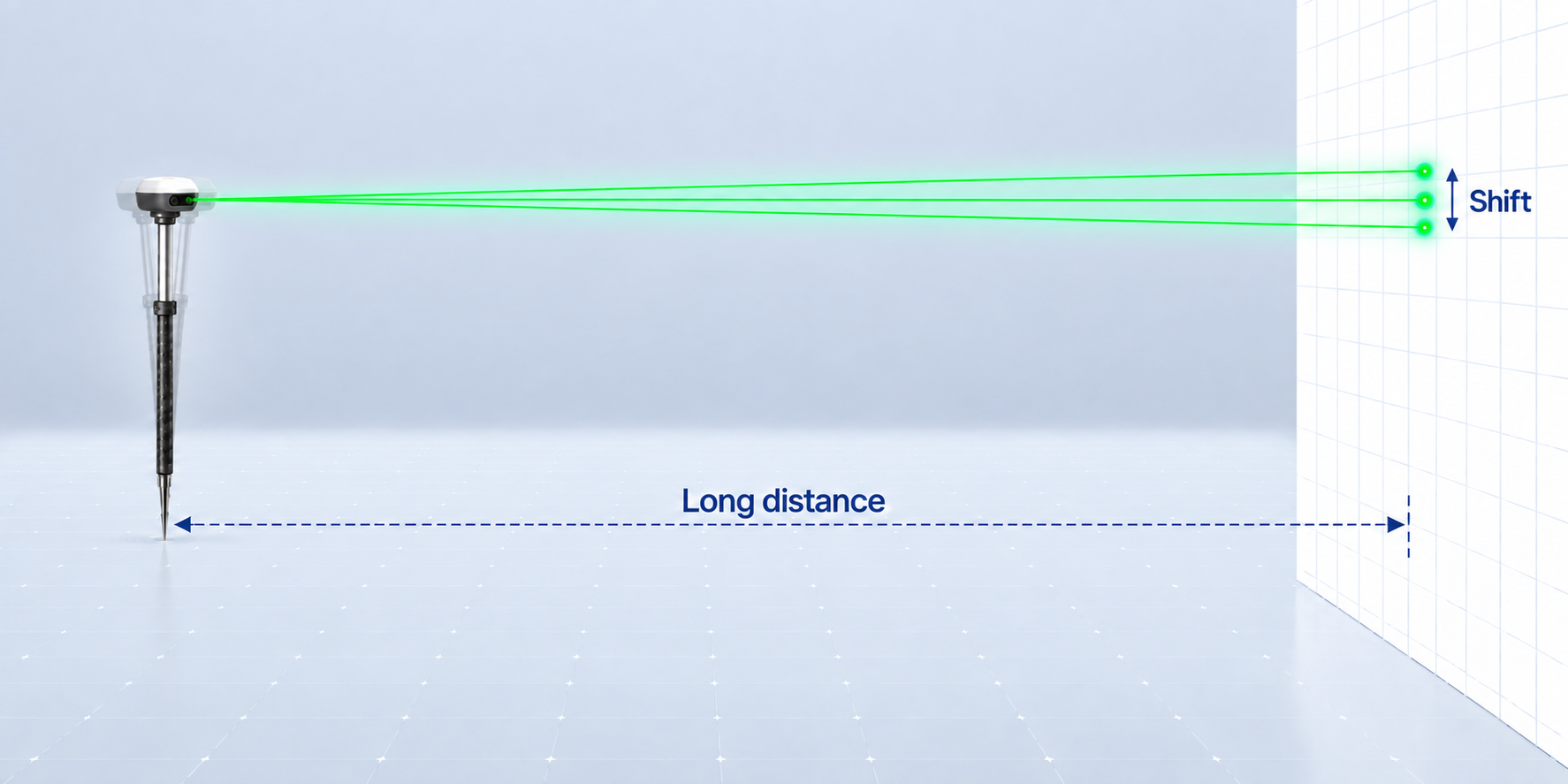
A small movement is amplified over distance, increasing the chance of measuring the wrong point
Intelligent stabilization powered by vision
LaserLock™ combines laser ranging with real-time visual feature detection.
During each laser measurement, TS30 captures image of the target area and detects visual features within the laser sampling area. It then evaluates multiple laser samples in relation to those features and intelligently selects the most reliable result.
As the user tries to hold the device steady and align the laser spot with the target, LaserLock™ helps the system recognize the intended measurement point. Even if the laser spot moves slightly around that point during the measurement, the technology can identify the relevant target area and deliver a more dependable result.
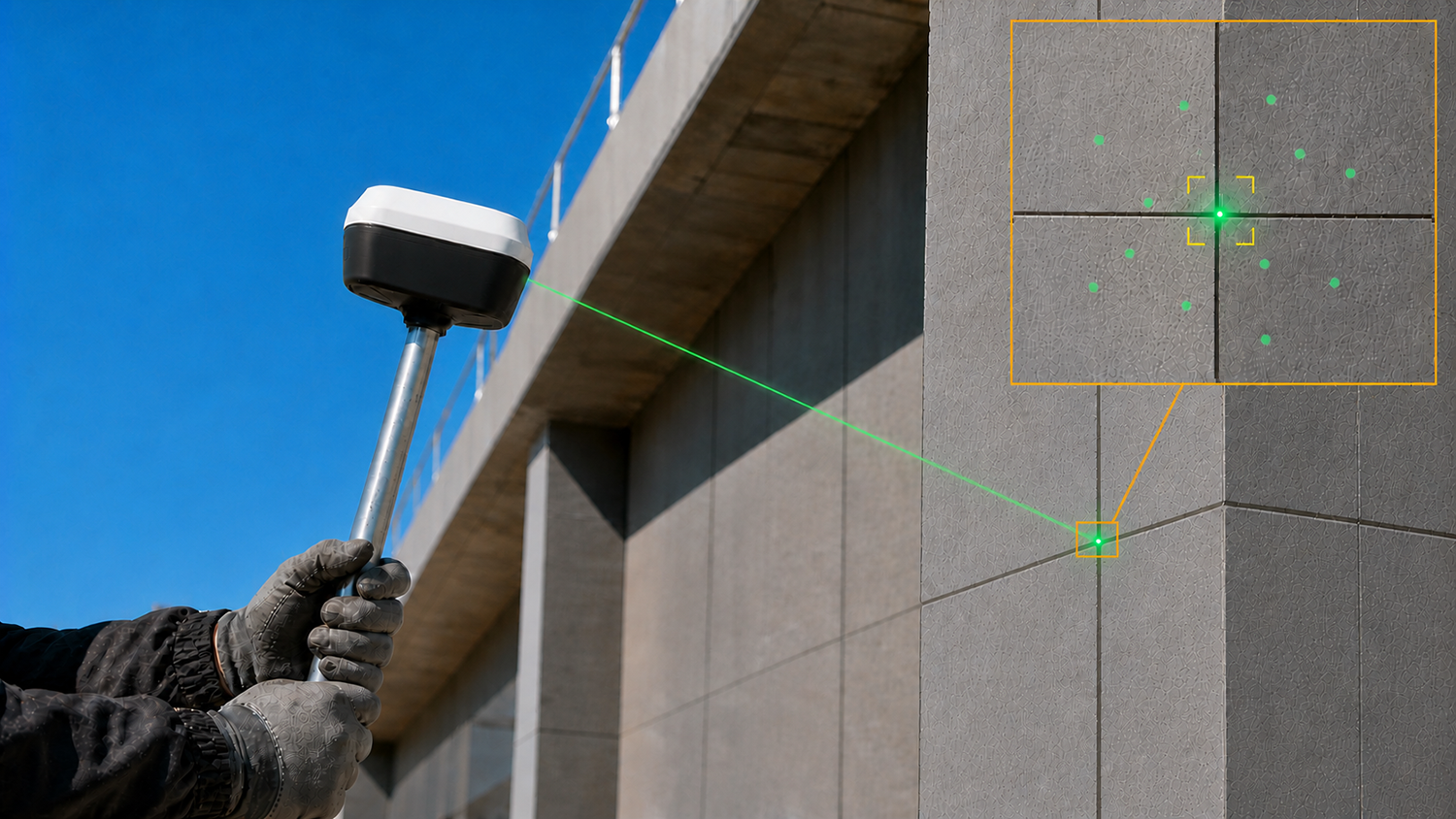
Visual feature detection during laser ranging measurement
Focused on the intended point
Real-world environments contain many strong visual features, including edges, corners, patterns, signs, and high-contrast objects. LaserLock™ keeps its feature detection focused on the laser sampling area. A stronger feature located several centimeters away will not draw the system away from the intended measurement point.
If multiple feature points are present within the sampling area, the system evaluates both the strength of each feature and how closely the distribution of the laser samples corresponds to it. Based on these relationships, LaserLock™ identifies the feature point that best matches the user’s measurement target.
If no suitable feature can be identified within the sampling area, the system does not extend its search to a stronger but unrelated feature outside that area. Instead, it applies mathematical processing to the available laser samples to derive a representative average result.
By combining laser sampling with visual feature analysis, LaserLock™ can intelligently identify the point the user intends to measure.
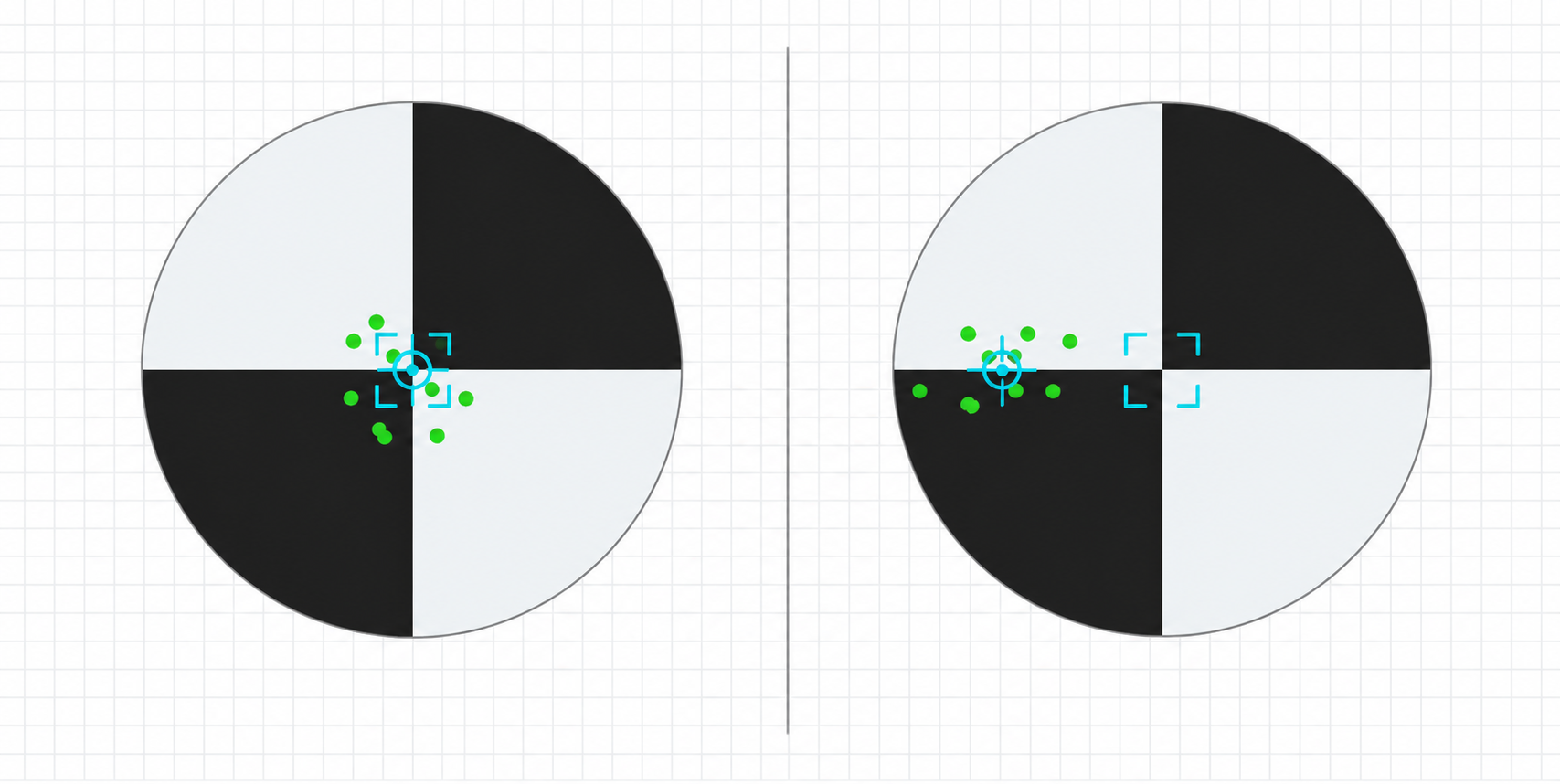
Identification based on a combination of visual feature points and laser sampling
Real-time processing with no extra steps
The entire LaserLock™ process runs in real time, with the analysis completed in only a few milliseconds. During laser measurement, the TS30 captures images of the target area and records the receiver pose corresponding to each image and laser sample.
There system then automatically:
l Detects visual feature points within the laser area.
l Uses the recorded pose and ranging distance to project each laser sample into the image coordinate system.
l Compares the projected sample positions with the positions of the detected visual feature points.
l Evaluates how closely the laser samples correspond to the visual features and selects the most reliable result
All of these calculations take place automatically during the laser ranging measurement. No additional steps or post-processing are required. The user simply aims and measures, while LaserLock™ completes the visual analysis, sample matching, and result selection in the background.
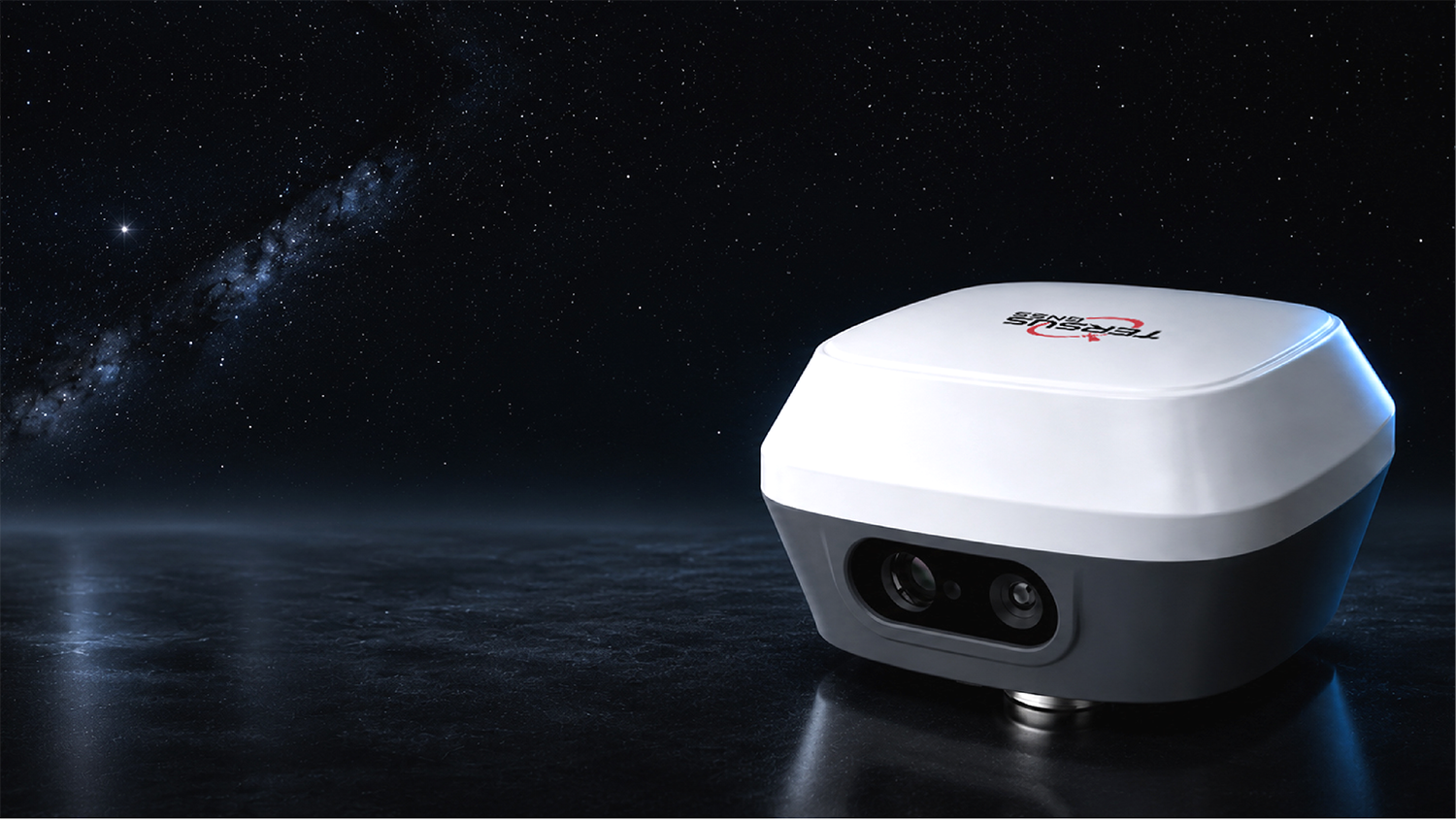
captuRTK TS30 featuring LaserLock™ technology
Stable ranging made simple
LaserLock™ transforms the laser-ranging experience. By combining vision-assisted feature detection, laser-guided target identification, and intelligent sample selection, it reduces the effect of natural movement and makes long-distance laser measurement easier to perform.
With LaserLock™, TS30 helps users obtain the measurement they intended with less effort and greater confidence. Aim naturally, lock intelligently, and measure confidently.
LaserLock™. Let's Rock.